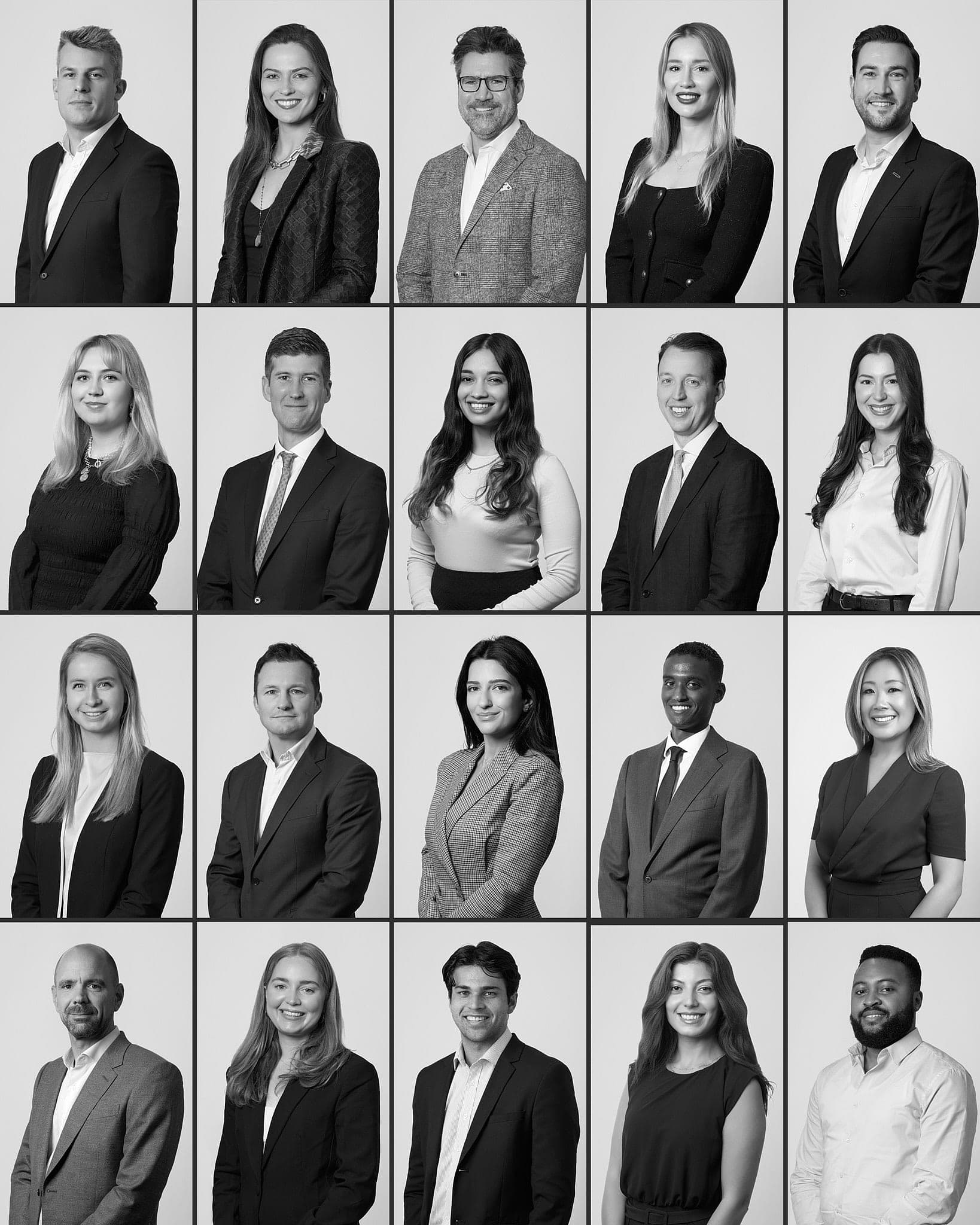
Sotheby's , Press Portraits for Directors & Department Heads
When Sotheby's needs press portraits of its directors, the images carry the weight of 280 years of institutional reputation. There is no margin for generic.
Project hero media

Project image gallery
5 photosCase Study
Sotheby's is not a company that needs to explain who it is. Founded in 1744, it is one of the world's most recognised auction houses , a name that carries institutional authority in art, luxury, and culture. When its directors and department heads need press portraits, those images appear alongside auction results worth millions, in publications read by collectors, curators, and institutional buyers. The photography has to match the context it will inhabit. This is an ongoing, multi-year commission to produce press-ready editorial portraits for Sotheby's senior leadership in London.
The Brief
Produce editorial press portraits for Sotheby's directors and department heads that meet the standards of international art-world media. Each portrait must function across press releases, auction catalogues, institutional communications, and media features , contexts where the Sotheby's name carries centuries of expectation. The visual language must be consistent across subjects and sessions, maintaining a unified institutional identity even when portraits are produced months or years apart.
The Challenge
- Sotheby's leadership portraits appear in the Financial Times, Art News, and auction catalogues. Every image must meet the editorial standards of publications that routinely reject anything that looks like a corporate headshot.
- Directors and department heads operate across specialisms , contemporary art, jewellery, Old Masters, wine , each with distinct visual cultures. The portrait style must unify them under one institutional identity without erasing individuality.
- A multi-year commission means portraits shot in 2023 must sit seamlessly alongside those shot in 2026. Visual consistency has to survive across sessions, seasons, and potentially different locations.
- Sotheby's employees at this level are exceptionally busy. Session time is limited, direction must be efficient, and every frame needs to be usable. There is no 'we'll reshoot next week.'
- Press portraits for an auction house carry a specific tonal requirement: authoritative and cultured, never corporate-stiff. The images must suggest someone you'd trust to authenticate a Vermeer, not someone who manages a budget.
- The portraits must work at both the intimate scale of a press bio and the full-page scale of a feature profile, maintaining quality and presence regardless of reproduction size.
The Approach
- Established a lighting and tonal framework in the first session that defines the Sotheby's portrait standard , controlled, editorial, with enough character to distinguish each subject while holding institutional consistency across the full set.
- Worked within Sotheby's London premises to ground each portrait in the institution's own environment. The setting reinforces provenance without requiring elaborate production , the context does the work.
- Kept sessions short and structured. Each director received the same efficient sequence: a brief settling conversation, directed compositions at two to three focal lengths, and a final open frame. Respectful of time, rigorous in output.
- Directed for gravitas without stiffness. The target expression is the one that appears when someone is thinking about their specialism, not when they're being told to smile. Confidence that comes from knowledge, not performance.
- Documented the lighting setup, colour grade, and compositional parameters so every subsequent session , regardless of when it occurs , can reproduce the same visual standard without deviation.
- Delivered press-ready files in the formats and resolutions that major publications require, with metadata and naming conventions that Sotheby's communications team can deploy without additional processing.
The Execution
Each session is built around the same principle: produce portraits worthy of the contexts they'll inhabit. Lighting is set to the documented Sotheby's standard before the subject arrives , a controlled, editorial approach that flatters without softening, using the natural qualities of Sotheby's London interiors as an environmental anchor. Direction is economical and precise: a few words to establish the register, minimal posing adjustments, and the patience to wait for the expression that reads as genuine authority rather than performed confidence. The result is portraits that look like they belong in the art press , because that's exactly where they end up. Post-production applies the same grade and retouching standard across every session, so portraits produced years apart maintain the visual continuity that an institution like Sotheby's demands.
The Outcome
Sotheby's now has a growing archive of press-ready editorial portraits that represent its senior leadership with the quality its 280-year reputation requires. The images appear in international media, auction catalogues, institutional communications, and digital platforms , each portrait carrying the same visual authority regardless of when it was produced. The multi-year relationship has eliminated the inefficiency of briefing a new photographer for each press need; the standard is set, the process is established, and each new session adds to a coherent institutional portrait collection. Directors and department heads have individual images that feel personal and distinctive, yet unmistakably part of one unified visual identity.
Press Portraits for Institutional Leadership
Need editorial portraits that meet the standards of international press and institutional publication? Let's establish a visual standard worthy of your reputation.
Start a Project